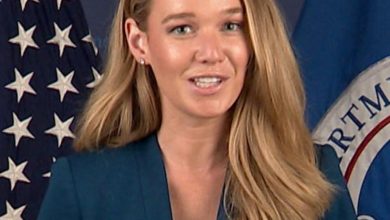
Leah Foley U.S. Attorney Wikipedia, Biography, Age, Husband, Education, Legal Background, Career, Cases, Net Worth, Salary, Family

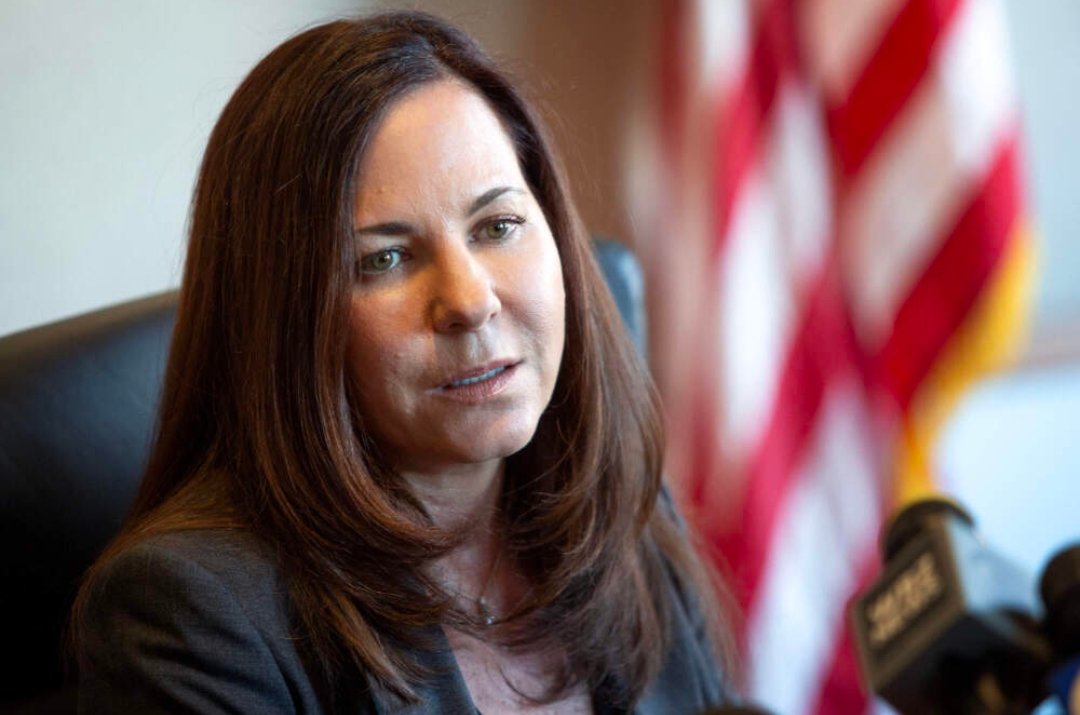
Leah B. Foley serves as the United States Attorney for the District of Massachusetts, a position she assumed on January 20, 2025. Appointed by Acting Attorney General James McHenry, she acts as the chief federal law enforcement officer for the district, overseeing the prosecution of federal crimes and the representation of the U.S. government in civil litigation. Her appointment marked a significant transition in the office, following the departure of her predecessor, Joshua Levy.
Before ascending to the top post, Foley built a career spanning nearly 23 years as a federal prosecutor. She served as an Assistant U.S. Attorney (AUSA) in both the District of Columbia and the District of Massachusetts. In Massachusetts, she held key leadership roles, including Deputy Chief of the Narcotics & Money Laundering Unit and Lead Attorney for the Organized Crime & Drug Enforcement Task Force (OCDETF). Her prosecutorial work has largely focused on complex criminal organizations, including international and domestic narcotics investigations, money laundering, human trafficking, and firearms cases.
Foley’s legal background extends beyond the courtroom. From 1998 to 2002, she served as Counsel to the U.S. Senate Judiciary Committee, advising Senator Orrin Hatch on drug policy and criminal law. In this capacity, she negotiated policy issues and traveled internationally to assess law enforcement initiatives. Prior to her public service, she worked in private practice at the firm diGenova & Toensing in Washington, D.C., handling cases related to tax, antitrust, and securities fraud.
Age and Early Life
Born around 1970 or 1971, Leah Foley is approximately 54 years old as of 2025. While exact details regarding her specific date of birth and the intricacies of her childhood are not publicly disclosed—common for high-ranking federal prosecutors whose security is paramount—her academic and early professional trajectory suggests a disciplined and intellectually rigorous upbringing.
Her roots trace back to the southern United States, where she pursued her undergraduate studies. This regional background eventually blended with a career largely centered in the power corridors of Washington, D.C., and the legal hubs of New England.
Education and Qualifications
Leah Foley’s educational background is marked by a progression through prestigious institutions that honed her capabilities in both civil and criminal law. Her academic journey provided the foundational knowledge for her later specialization in complex legislative and prosecutorial matters.
Undergraduate Studies
Foley earned her Bachelor of Arts degree from the University of Louisiana at Lafayette. She was a multidisciplinary student, majoring in English, Philosophy, and French.
Juris Doctor (J.D.)
She pursued her legal education at Loyola Law School (Loyola Marymount University), where she earned her Juris Doctor. It was here that she began to develop the legal acumen that would later define her career in public service.
Master of Laws (LL.M.)
Demonstrating a commitment to advanced legal scholarship, Foley went on to obtain a Master of Laws (LL.M.) from Georgetown University Law Center in 1996. Georgetown, located in the heart of Washington, D.C., is renowned for its focus on federal law and policy, making it a fitting capstone for a lawyer destined for high-level federal service.
Legal Background and Private Practice
Before becoming a fixture in the Department of Justice, Foley cut her teeth in the competitive world of private practice in Washington, D.C. She began her career as an Associate at the boutique firm diGenova & Toensing.
During this period, her practice was far removed from the violent crime and narcotics cases that would later define her career. Instead, she focused on high-stakes white-collar issues, representing clients in:
-
Tax Fraud: Navigating complex IRS regulations and defense.
-
Antitrust Litigation: Dealing with corporate competition laws.
-
Securities Fraud: Handling cases involving financial markets and regulations.
-
FEC Violations: Advising on Federal Election Commission compliance.
Legislative Experience: The Senate Judiciary Committee
From 1998 to 2002, Foley stepped out of the courtroom and into the legislative arena, serving as Counsel to the United States Senate Committee on the Judiciary. In this capacity, she served as a key advisor to the Committee Chairman, Senator Orrin G. Hatch.
Her portfolio in the Senate was substantial and focused heavily on criminal law policy. Her responsibilities included:
-
Drug Policy Advisor: She advised Senator Hatch on national drug policy, helping to shape the legislative framework used to combat narcotics.
-
International Diplomacy: Foley traveled to foreign countries to assess and coordinate American law enforcement initiatives abroad, giving her a global perspective on the drug trade.
-
Policy Negotiation: She negotiated complex legal issues with representatives from federal agencies, public interest groups, and other elected officials.
Career as a Federal Prosecutor
Foley’s career as a prosecutor spans 23 years, characterized by a steady rise through the ranks of the Department of Justice.
Assistant U.S. Attorney: District of Columbia
Her prosecutorial career began in the District of Columbia, one of the busiest federal dockets in the nation. As an Assistant U.S. Attorney (AUSA) in D.C., she was in the trenches of criminal enforcement. Her caseload included:
-
Violent Crimes: Prosecuting assaults, robberies, and homicides.
-
Sex Crimes: Handling sensitive cases involving sexual violence.
-
Appellate Work: Uniquely, she also authored appellate briefs and argued cases before the District of Columbia Court of Appeals, demonstrating her ability to handle both trial-level advocacy and complex legal arguments.
Assistant U.S. Attorney: District of Massachusetts
In 2006, Foley transferred to the District of Massachusetts, where she would spend the next two decades cementing her reputation.
Leadership in Narcotics and Money Laundering
She eventually rose to the position of Deputy Chief of the Narcotics & Money Laundering Unit. In this supervisory role, she managed a team of prosecutors and oversaw investigations that were often international in scope. She supervised cases involving:
-
International and domestic narcotics trafficking.
-
Complex money laundering schemes.
-
Human trafficking rings.
-
Illegal firearms distribution.
Read Also: Nicole Parker FBI Wikipedia, Biography, Age, Husband, Books, Net Worth, Partner
Lead Attorney for OCDETF
Since 2013, Foley served as the Lead Attorney for the Organized Crime & Drug Enforcement Task Force (OCDETF) in Boston. The OCDETF program is the centerpiece of the U.S. Attorney General’s drug strategy, designed to dismantle the most significant criminal organizations that threaten the United States. In this role, Foley worked side-by-side with agents from the FBI, DEA, and Homeland Security Investigations (HSI), leading long-term, intelligence-driven investigations against major drug cartels and gangs.
Appointment as U.S. Attorney
The pinnacle of her career came in early 2025. On January 20, 2025, she was appointed as the United States Attorney for the District of Massachusetts by Acting Attorney General James McHenry. This appointment was part of a swift move by the incoming administration to place veteran prosecutors in key leadership roles.
Following her initial administrative appointment, she was appointed by the District Court on May 7, 2025, to continue serving as U.S. Attorney pending the nomination and confirmation of a permanent successor by the U.S. Senate. This “court-appointed” status is a common mechanism to ensure stability in federal prosecutor offices during administration changes.
Major and Notable Cases
As U.S. Attorney, Foley has overseen high-profile cases that reflect her priorities of public safety and financial integrity.
The Dana-Farber Settlement
One of the most significant civil recoveries under her tenure involved the Dana-Farber Cancer Institute. In December 2025, her office announced a $15 million settlement with the institute to resolve allegations of research grant fraud. The case involved allegations that researchers had falsified data in grant applications to the National Institutes of Health (NIH). Foley emphasized that the integrity of academic research funded by taxpayer dollars is paramount.
Brown University and MIT Shooter
Foley’s office was central to the federal response regarding the tragic shootings involving an MIT physicist and a shooting at Brown University. Her office coordinated closely with the FBI and ATF, culminating in the identification of the suspect, a Portuguese national. This case highlighted her office’s role in managing crises that cross state lines and involve significant public fear.
Crackdown on Benefit Trafficking
Demonstrating a commitment to protecting government programs, Foley’s office charged individuals involved in large-scale SNAP (Supplemental Nutrition Assistance Program) benefits trafficking. These cases often involve millions of dollars in fraud where benefits intended for the needy are illegally exchanged for cash.
Immigration and “Safe Injection” Sites
Foley has taken a firm conservative stance on specific public health and immigration issues. She has publicly criticized “safe injection sites,” arguing they facilitate addiction rather than cure it, and has been a vocal critic of open-air drug markets (often referred to as “Methadone Mile” in Boston). Furthermore, she has warned local officials against obstructing federal immigration enforcement, signaling a departure from previous “sanctuary” style policies in the region.
Salary and Net Worth
Salary
As a United States Attorney, Leah Foley’s compensation is determined by the Executive Schedule (EX) for federal employees. U.S. Attorneys are typically paid at Level IV of the Executive Schedule.
-
Estimated Annual Salary: Approximately $180,000 to $190,000 (depending on specific year adjustments and locality pay caps). While this is a significant income, it is often far lower than what an attorney of her experience and caliber could earn in the private sector, highlighting her commitment to public service.
Net Worth
Leah Foley’s specific net worth is not publicly disclosed. Federal financial disclosures for prosecutors are generally not broadcast to the public in the same manner as elected politicians unless specific requests are made.
Personal Life: Husband and Children
Leah Foley maintains a strict separation between her public duties and her private life. Information regarding her marital status or the identity of a spouse is not publicly disclosed.
Conclusion
Leah B. Foley’s career is a testament to the power of expertise and persistence in federal law enforcement. From her early days analyzing antitrust laws to her decades spent dismantling international drug rings, she has developed a reputation as a tough, competent, and highly experienced litigator. As U.S. Attorney for the District of Massachusetts, she brings a focus on law and order, prioritizing the prosecution of narcotics trafficking, fraud, and violent crime. Her leadership comes at a critical time for the district, bridging the gap between federal mandates and local enforcement needs.
FAQs
Who is Leah Foley?
Leah Foley is the United States Attorney for the District of Massachusetts, serving as the chief federal law enforcement officer for the region.
When was Leah Foley appointed U.S. Attorney?
She was appointed on January 20, 2025, by Acting Attorney General James McHenry.
What is Leah Foley’s educational background?
She holds a B.A. from the University of Louisiana at Lafayette, a J.D. from Loyola Law School, and an LL.M. from Georgetown University Law Center.
Is Leah Foley a Republican or Democrat?
While U.S. Attorneys are political appointees, prosecutors are expected to be non-partisan in their casework. However, she served as Counsel to Republican Senator Orrin Hatch and was appointed during a Republican administration transition.
What are Leah Foley’s top priorities?
Her known priorities include dismantling drug trafficking organizations (specifically fentanyl), enforcing immigration laws, and prosecuting complex fraud.
Has Leah Foley worked in private practice?
Yes, early in her career she was an Associate at the firm diGenova & Toensing in Washington, D.C.
Does Leah Foley have a husband or children?
For security and privacy reasons, information regarding her family life is not publicly disclosed.
How long has Leah Foley been a prosecutor?
She has served as a federal prosecutor for over 23 years, working in both the District of Columbia and Massachusetts.