Nnena Kalu Wikipedia, Biography, Age, Nationality, Ethnicity, Career, Awards, Prize, Husband, Net Worth, Family

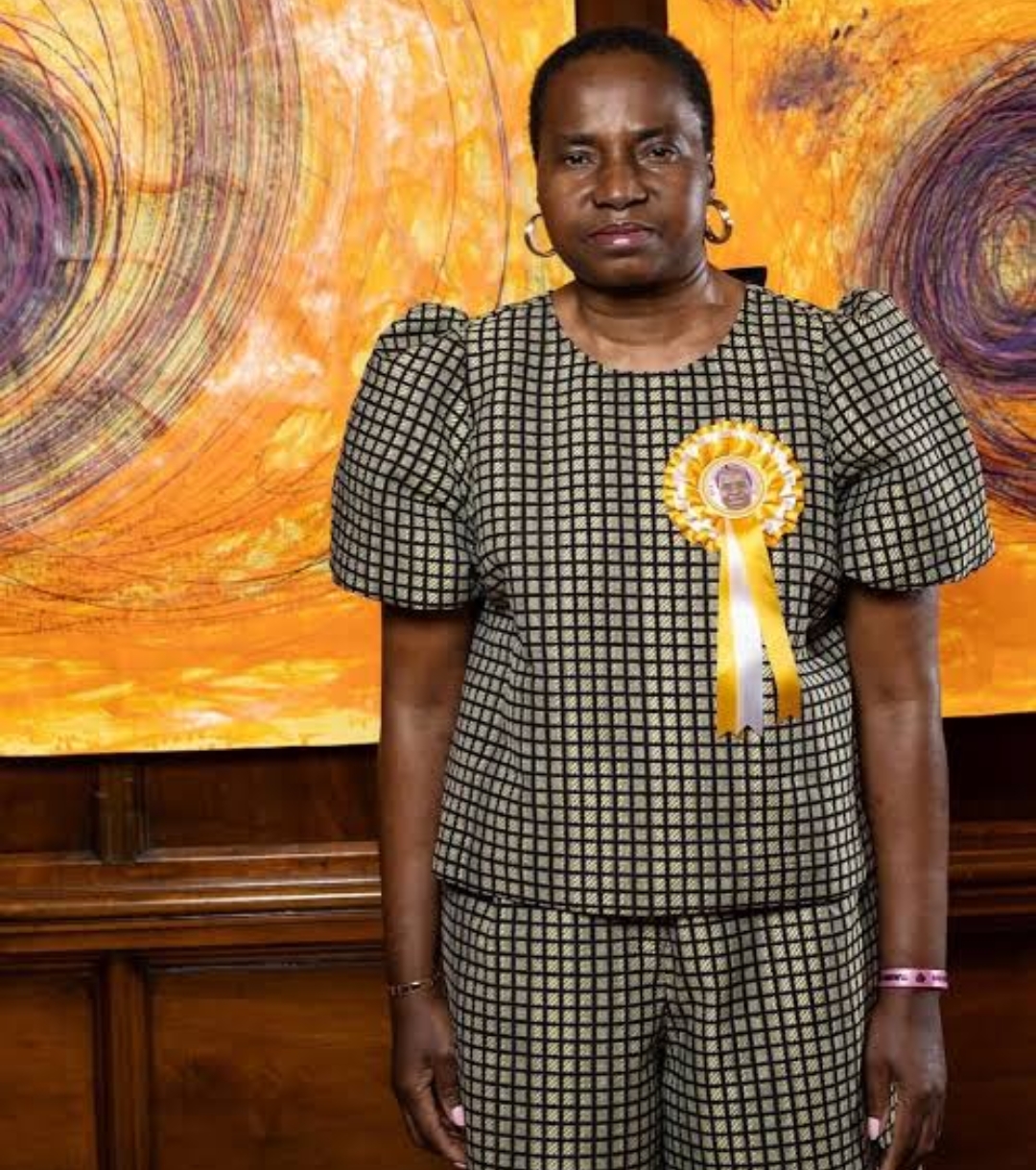
Nnena Kalu is a British sculptor and installation artist renowned for her large-scale, colorful, and texturally complex works. Born in Glasgow in 1966 to Nigerian parents, she has lived in London for most of her life. Kalu recently made history by winning the 2025 Turner Prize, becoming the first artist with a learning disability to receive the UK’s most prestigious visual arts award. Her victory is widely regarded as a watershed moment for the representation of neurodivergent artists in the contemporary art world.
Her artistic practice is defined by a distinct, rhythmic process of wrapping, binding, and layering. Kalu creates monumental, cocoon-like sculptures using everyday materials such as unspooled VHS tape, colorful cling film, fabric strips, cardboard, and rope. These sculptures are often site-specific, meaning she builds them directly within the gallery space, allowing the work to expand and react to its environment. Alongside her 3D work, she produces large-scale drawings featuring dense, vortex-like swirls that mirror the repetitive and energetic motions she uses in her sculpting.
Kalu has limited verbal communication and is autistic; her art serves as her primary mode of expression and engagement with the world. Since 1999, she has been a resident artist at ActionSpace, a London-based organization that supports artists with learning disabilities. ActionSpace has played a pivotal role in her career, providing her with the studio space and facilitation needed to develop her practice over decades.
Before her Turner Prize win, her work had already gained international attention, with exhibitions at major venues including the Walker Art Gallery in Liverpool, Manifesta 15 in Barcelona, and the Kunsthall Stavanger in Norway.
Quick Facts
Early Life and Background
Birth and Heritage
Nnena Kalu was born in 1966 in Glasgow, Scotland, to parents of Nigerian descent. Her dual heritage—Scottish and Nigerian—places her within a rich diaspora, though her artistic identity is primarily forged through her lived experience in the UK. She spent her earliest years in Glasgow before her family relocated to London, specifically the Wandsworth area, which would become her long-term home base.
Childhood and Diagnosis
Kalu is autistic and has limited verbal communication. From a young age, her interaction with the world was defined less by spoken language and more by sensory engagement and physical processes. Her early life was marked by the challenges often faced by neurodivergent individuals in the mid-20th century, a time when support systems and understanding of autism were far less developed than they are today. Despite these barriers, Kalu exhibited a strong, innate drive to create and manipulate materials, a precursor to the wrapping and binding techniques that would later define her career.
Artistic Education and Development
The Role of Hill House
Kalu’s formal journey into creativity began in the 1980s at Hill House, a day center in Tooting, South London. It was here that she first accessed art materials and began to explore her creative impulses. While the setting was more therapeutic than academic, it provided a crucial safe space for her to experiment. Initially, her work was two-dimensional, focusing on flat artworks, but the repetitive motions she employed hinted at a desire for more structural, physical engagement.
Joining ActionSpace (1999–Present)
The pivotal moment in Kalu’s career occurred in 1999, when she became a resident artist at ActionSpace. Based at Studio Voltaire in Clapham, ActionSpace is a leading organization dedicated to supporting artists with learning disabilities.
-
A Shift in Practice: Under the mentorship of artist facilitators, particularly her long-time studio manager Charlotte Hollinshead, Kalu began to transition from 2D drawings to the 3D sculptures she is famous for today.
-
Studio Support: ActionSpace provided the infrastructure—materials, space, and time—that allowed Kalu to work at the scale and intensity she required. Unlike traditional art schools, this environment was tailored to her specific needs, allowing her to develop her “wrapping” technique over decades without the pressure of academic conformity.
Career Timeline and Artistic Evolution
Developing the “Wrapping” Technique (2010s)
Around 2010, Kalu’s practice underwent a radical transformation. She moved away from flat clusters of color and began creating three-dimensional forms.
-
Process: She starts with a simple armature or “base” (often cardboard or a bundle of paper) and rigorously wraps it with layers of tape, yarn, rope, and unspooled VHS cassettes.
-
Physicality: The process is intensely physical. Kalu uses her entire body to bind the materials tight, creating tension and density. The sound of tape unspooling and the rhythmic motion of her arms are integral parts of the performance of her work.
-
Vortex Drawings: In 2013, she began producing large-scale drawings that mirror her sculptures. These works feature dense, swirling “vortexes” of line, often created with rhythmic, circular arm movements that result in tornado-like compositions on paper.
Rise to Prominence (2016–2024)
For many years, Kalu’s work was known primarily within circles supporting outsider art, but the quality of her output soon demanded mainstream attention.
-
Exhibitions: By 2016, her work was being shown alongside Turner Prize winners like Laure Prouvost. She gained significant traction with exhibitions at the Glasgow International (2018) and Humber Street Gallery (2019).
-
Commercial Representation: In 2024, she achieved a rare feat for a neurodivergent artist by securing commercial representation with Arcadia Missa, a hip London gallery. This move signaled that the market was finally catching up to the critical acclaim she had been quietly building.
-
Institutional Recognition: Her work was acquired by major collections, including the Arts Council Collection and The Tate, cementing her status as a significant British artist.
Read Also: Darren Beveridge Wikipedia, Biography, Age, Ranking, Career, Net Worth
Major Achievements and Awards
The 2025 Turner Prize Win
The crowning achievement of Nnena Kalu’s career is undoubtedly her 2025 Turner Prize win.
-
The Nomination: She was nominated for her exhibition Conversations at the Walker Art Gallery in Liverpool and her stunning installation Hanging Sculpture 1 to 10 at Manifesta 15 in Barcelona.
-
The Winning Work: At the prize exhibition in Bradford’s Cartwright Hall, Kalu presented a dazzling installation of suspended, colorful cocoons. The judges praised the “finesse of scale, composition, and color” and noted the “compelling presence” of the work.
-
Historic Significance: At age 59, Kalu became the first artist with a learning disability to win the award. The win was described by the art press as “seismic,” shattering a “stubborn glass ceiling” that had long excluded neurodivergent artists from the highest echelons of the art world.
-
Prize Money: She was awarded £25,000 (approx. $33,000), a sum that underscores the professional value placed on her practice.
Other Notable Exhibitions
-
Creations of Care (2025): Her first major solo museum show outside the UK, held at Kunsthall Stavanger in Norway.
-
Manifesta 15 (2024): A major European biennial where her work was installed in a disused power station, highlighting the adaptability of her sculptures to industrial spaces.
-
Royal Academy Summer Exhibition: Kalu has also featured in this prestigious annual event, further broadening her audience.
Artistic Style and Philosophy
Materiality and Process
Kalu’s work is often categorized as Process Art, where the act of making is as important as the final object.
-
Materials: She utilizes refuse and low-cost materials—orange plastic safety fencing, pink cling film, black VHS tape, packing tape. These materials are chosen for their texture, color, and ability to be stretched and bound.
-
Site-Specificity: Kalu rarely transports a finished sculpture “as is.” Instead, she often builds or modifies the work on-site, reacting to the architecture of the gallery. She might bind a sculpture to a pillar or let it spill onto the floor, making the work symbiotic with its environment.
The “Loop” and Repetition
Critics have noted the “loop” as a central motif in her life and art. Whether it is the physical loop of tape around a bundle or the visual loop of her vortex drawings, this repetition serves as a grounding mechanism. It is a visual language that transcends her lack of verbal communication, offering a direct window into her energetic state.
Personal Life
Personality and Daily Life
Those who work with Kalu, particularly her facilitators at ActionSpace, describe her as having a vibrant and determined personality.
-
Love for Music: Kalu often works while listening to loud disco music or pop tunes. The rhythm of the music frequently influences the pace and energy of her wrapping, turning her studio time into a form of dance.
-
Communication: While she does not use spoken language to discuss her concepts, she is decisive in her artistic choices. She selects her own materials from piles prepared for her and dictates the start and end of a piece through her physical engagement. If she is unsatisfied with a work, she will cut it open or re-bundle it until it meets her internal criteria.
Family and Support System
Details about her immediate family (siblings or parents) are kept private to protect their privacy. She is not married and does not have a public partner or “husband.” Her primary “family” in the public eye is the close-knit team at ActionSpace, specifically Charlotte Hollinshead, who has worked with her for over 25 years and often speaks on her behalf at public events (including the Turner Prize acceptance speech).
Net Worth and Income
As an artist with a learning disability who requires supported living and studio environments, “Net Worth” in the celebrity sense is difficult to calculate and largely irrelevant to her lifestyle.
-
Prize Money: The £25,000 Turner Prize is her most significant public financial earning.
-
Art Sales: With representation by Arcadia Missa, her large-scale works and drawings are now sold on the primary art market. Large installations by Turner Prize winners can command prices in the tens of thousands of pounds, though proceeds typically support her studio costs, ActionSpace, and her future care.
-
Funding: Much of her career has been supported by arts grants, including funding from the Paul Hamlyn Foundation and the Arts Council England.
Conclusion
Nnena Kalu’s journey from a quiet day center in Tooting to the podium of the Turner Prize is one of the most inspiring narratives in modern art history. She has forced the art establishment to look beyond the biography of the artist and engage directly with the power of the work itself. Her sculptures—bound, knotted, and bursting with color—are testaments to the human urge to create, existing beyond the boundaries of language and neurotypical norms. As the 2025 Turner Prize winner, Nnena Kalu has not only validated her own practice but has opened the door for a generation of neurodivergent artists to follow, proving that great art requires no explanation other than its own undeniable presence.
FAQs
What is Nnena Kalu famous for?
Nnena Kalu is famous for her large-scale, colorful sculptures made from wrapped everyday materials and for winning the 2025 Turner Prize.
Does Nnena Kalu speak?
Nnena Kalu has limited verbal communication. She communicates primarily through her art, gestures, and the physical process of making.
What materials does Nnena Kalu use?
She uses everyday materials such as unspooled VHS tape, colorful cling film, fabric strips, cardboard, rope, and packing tape.
Is Nnena Kalu married?
No, there is no public record of Nnena Kalu being married. She lives a private life supported by her family and care network.
How did Nnena Kalu win the Turner Prize?
She won the 2025 Turner Prize for her exhibition Conversations in Liverpool and her installation at Manifesta 15 in Barcelona. The judges were impressed by the scale and compelling presence of her work.
Where is Nnena Kalu from?
She was born in Glasgow, Scotland, to Nigerian parents, but she has lived in London for most of her life.
How old is Nnena Kalu?
Born in 1966, Nnena Kalu is 59 years old as of her Turner Prize win in 2025.